How does Goal differ from roulette-style mini games?
Goal is more sequential. Each correct step increases the pressure to continue, which makes stop discipline central to the experience.

Learn how Goal progresses step by step, why cash-out pressure matters, and how to use the demo to understand pacing before live play.

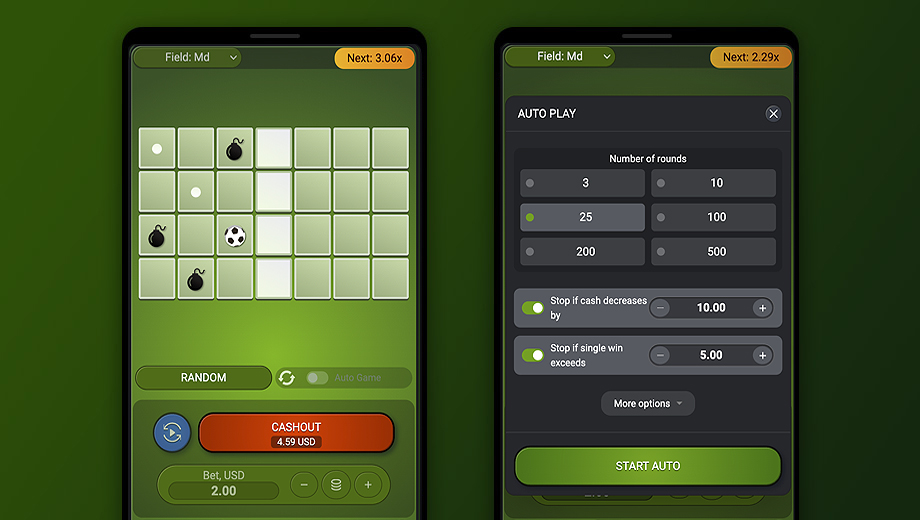
In this game of chance, goal of the player is to get to the end of the field and score a goal. Every line is step of the game. There is a bomb in each of 5 tale lines, and player must guess the correct patch. Player can also cash out after each successful guess and take his winnings, but if he continues to play, his winnings will increase.
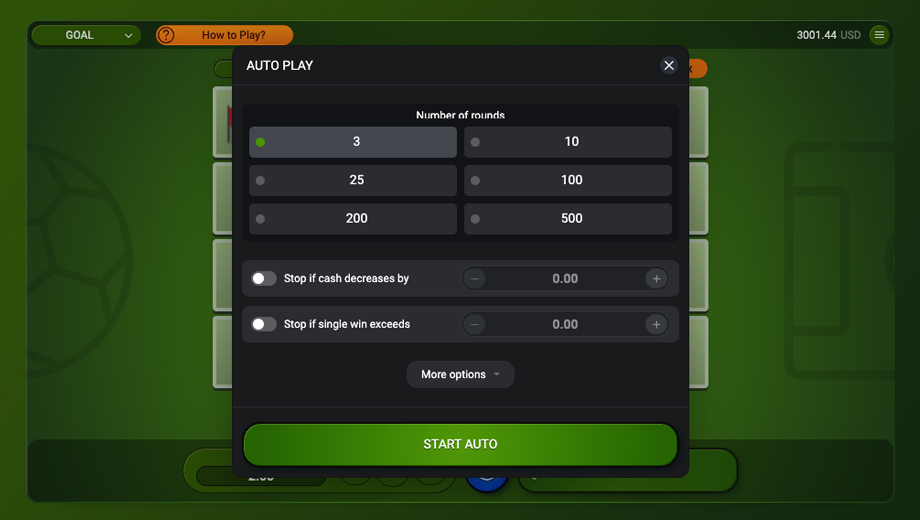
Game also provides autoplay option where player can customize various settings.

Technology
Game Type
Return to Player (RTP)
Devices
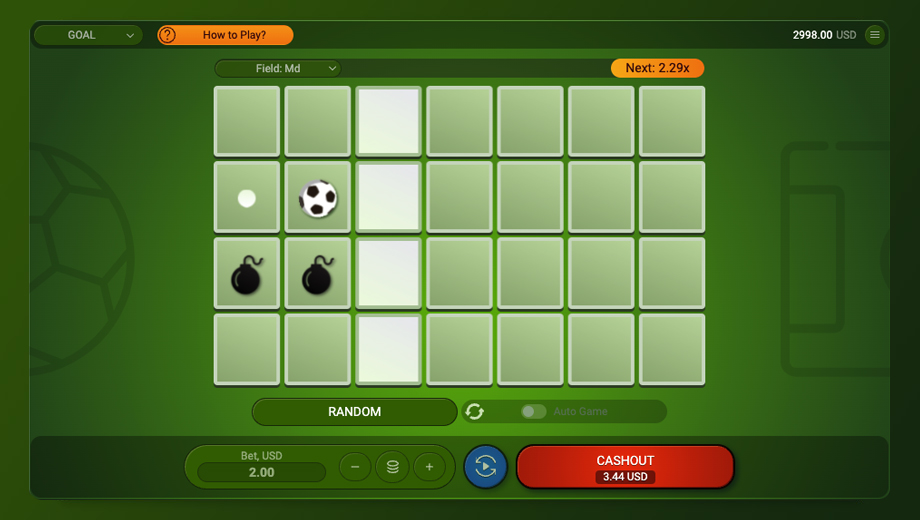
Goal is a SPRIBE mini game built around a lane-by-lane progression system where each successful step increases the pressure to continue. The main value of this page is to explain the format before the player enters the demo.
Instead of generic sales language, this guide focuses on how the game behaves, how the demo helps, and what a player should understand about RTP, fairness, and mobile access.
Goal brings a sports-themed presentation to a short-session format designed for quick decisions and fast pacing.
Each successful lane makes the next choice harder, which is why a guide page should explain pressure and pacing rather than only show a logo and CTA.
RTP is a long-run theoretical figure. It does not predict what will happen in a short sample of rounds, so demo mode is useful for understanding pace, controls, and decision points before any real-money exposure.
Provably fair messaging is most useful when paired with explanation. Players should know that fairness claims refer to how results are produced and verified, not to guaranteed outcomes.
These games are designed for browser-based play on desktop and mobile. That makes safe access, page speed, and readable help content more useful than oversized promotional sections.
Sports-themed presentation can pull in players who are new to mini games, which makes demo-first framing more important.
Goal is more sequential. Each correct step increases the pressure to continue, which makes stop discipline central to the experience.
The step-by-step format feels intuitive, but demo mode helps players see how quickly confidence can shift after a few successful lanes.